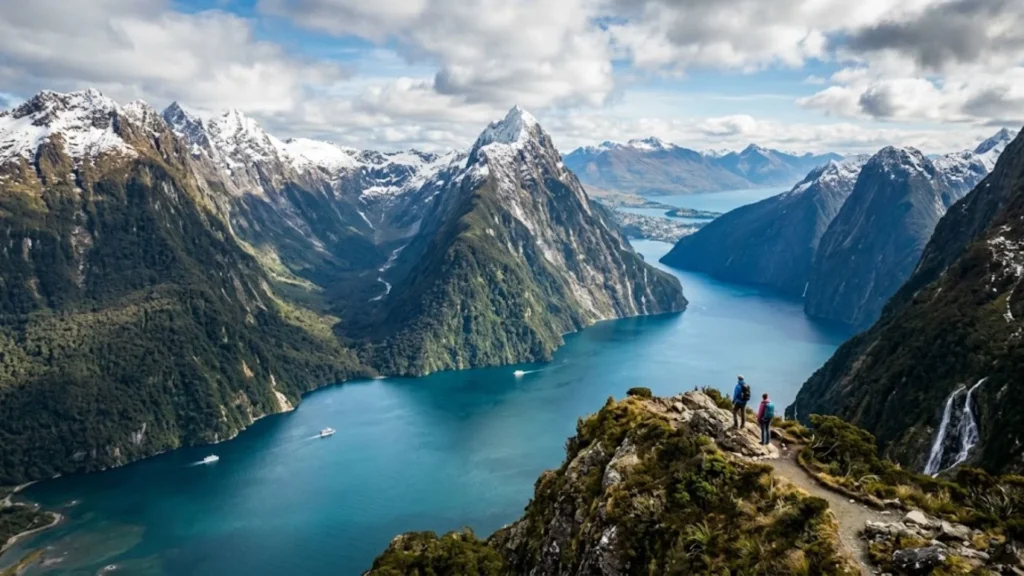
Discover the best places to visit in New Zealand. From Queenstown's adventure scene to Milford Sound's dramatic fjords, Rotorua's geothermal wonders, and Auckland's city skyline.
Best Places to Visit in New Zealand in 2026: Queenstown, Milford Sound, Rotorua & Auckland Ranked
Here’s the thing. New Zealand doesn’t do average scenery. It does fjords that swallow whole cruise ships. Geysers that erupt on a timer. Mountain roads that make your hands sweat. You could spend months here and still miss something extraordinary. But most people have two weeks. Maybe three. So you need a short list.
That’s where this best places to visit in New Zealand guide cuts through the noise.
I’ve visited New Zealand three times since 2014. I’ve driven from Auckland to Rotorua in sideways rain. I’ve stood at Milford Sound with sandfly bites on my ankles and my jaw on the floor. I learned the hard way that you can’t see it all. But you can see the best.
Quick Answer: Queenstown and Milford Sound / Piopiotahi on the South Island, plus Rotorua and Auckland on the North Island, are the best places to visit in New Zealand for stunning natural beauty and unique cultural experiences. Queenstown delivers adrenaline and alpine lakes.
Milford Sound delivers raw fjord drama. Rotorua delivers geothermal power and Māori culture. Auckland delivers city energy, volcanoes, and island escapes.
In this article, I’ll break down each destination with practical 2026 travel advice, costs, timing tips, and the mistakes you should avoid.
Why Queenstown Is the Best Base for South Island Adventure
Direct Answer: Queenstown is the best city to visit in New Zealand if you want adrenaline, alpine scenery, and easy access to national parks without sacrificing good coffee and hot showers.
Queenstown sits on the edge of Lake Wakatipu, surrounded by jagged peaks called the Remarkables. The name is accurate. But Queenstown isn’t just a bungee-jumping pit stop. It’s a working town with 15,000 locals, some of the best New Zealand travel destinations for outdoor experiences, and more day trips than you can count.
I first landed there on a shaky Air New Zealand flight. The pilot banked hard between mountains. I thought we were crashing. Turns out that’s just the approach. That’s Queenstown for you — even the airport is an experience.
What Makes Queenstown a Must-Visit Place in New Zealand
- Lake Wakatipu — a 50-mile-long glacial lake that changes color from slate blue to teal depending on the light.
- Skyline Queenstown — a gondola up Bob’s Peak with views that genuinely make people laugh out loud.
- Bungee jumping — the Kawarau Bridge site is where commercial bungee started in 1988.
- Day trips to Glenorchy — a 45-minute drive that some call the most beautiful road in New Zealand.
According to Stats NZ accommodation data released in 2025, Queenstown consistently records some of the highest visitor guest nights in the country, especially between December and March. That’s not surprising. It’s the rare place where you can ski in the morning, drink wine in the afternoon, and eat world-class lamb by the lake at night.
Travel writer Sarah Bennett, co-author of The New Zealand Tramper’s Handbook, makes a sharp point: most travelers overpack and under-plan for Queenstown weather. She’s right. I watched a German couple in shorts try to hike Ben Lomond in 7°C wind. They turned back after 20 minutes.
Key Takeaway:
- Queenstown works best as a 3–4 day base, not a one-night stop.
- Book Skyline Queenstown tickets online — the line at 10 a.m. is brutal.
- Don’t skip Glenorchy. It’s 45 minutes and feels like another planet.
- Rent a car. Public transit in the South Island is thin compared to the North Island.
🇳🇿 Top 5 New Zealand Tour Packages · September – December 2026
Curated itineraries across the North & South Islands. All packages include accommodation, transport, and key activities.
New Zealand Wonderland
Premium GroupComprehensive north-to-south journey featuring the Bay of Islands, Rotorua, Wellington, the TranzAlpine train, Franz Josef Glacier, Milford Sound, Queenstown, and Aoraki Mount Cook. Includes Māori cultural evening at Te Pā Tū, Interislander ferry crossing, and Freedom of Choice inclusions in five locations.
- Waitangi Treaty Grounds visit
- Te Pā Tū Māori village feast
- TranzAlpine scenic train
- Milford Sound cruise
- Aoraki / Mt Cook stay
- 27 meals & hand-picked hotels
Taste of New Zealand
Self-DriveFlexible self-drive itinerary covering the North and South Islands. Includes 13 nights’ accommodation, a 14-day rental car with unlimited mileage and full insurance, plus the Interislander ferry from Wellington to Picton. Stay in Rotorua, Wellington, Nelson, Fox Glacier, Queenstown, Te Anau, Dunedin, and Christchurch.
- Car rental & ferry included
- Two accommodation categories
- Fox Glacier & Lake Matheson
- Queenstown & Te Anau stays
- Cat 1 from €1,579 / Cat 2 from €1,889
- Flexible & independent
South Island Encompassed
Small GroupAdventure-focused South Island journey. Highlights include Abel Tasman National Park, seal colonies, Pancake Rocks, Lake Matheson, Aoraki/Mt Cook, a Milford Sound day cruise, and a Lake Tekapo bike ride. Stay in wilderness hostels and enjoy plenty of free time in Franz Josef and Queenstown.
- Abel Tasman boat excursion
- Milford Sound cruise
- Franz Josef free day (heli-hike, kayak)
- Queenstown – adventure capital
- Lake Tekapo bike ride
- Authentic group vibe
New Zealand Amplified Tour
Active / CultureAction-packed guided tour covering both islands. Visits Auckland, Coromandel, Rotorua, Taupō, Wellington, Kaikōura, Wanaka, Queenstown, Lake Tekapo, and Franz Josef. Includes a Māori cultural night with hāngī dinner, haka and poi dance lessons, and pounamu (greenstone) carving in Franz Josef. Optional Hobbiton, Tongariro Crossing, and Milford Sound excursions.
- Māori cultural night & hāngī
- Pounamu carving workshop
- Franz Josef & Lake Tekapo
- Queenstown & Wanaka
- Optional Hobbiton & Milford
- Dorm share or private upgrade
New Zealand Magic
GuidedFully guided 17-day tour from south to north. Includes Christchurch, Kaikōura, Picton, Wellington, Rotorua, and Auckland. Experience the Transitional Cathedral, coastal wildlife in Kaikōura, the Interislander ferry, and Māori cultural performances. A rich blend of city, coast, and culture.
- Kaikōura marine wildlife
- Picton & Marlborough Sounds
- Interislander ferry crossing
- Rotorua geothermal & culture
- Cardboard Cathedral (Christchurch)
- Prices from $9,555 NZD
- Prices: All rates are indicative, based on twin-share accommodation and subject to change until booked. Prices may vary with exchange rates, seasonal demand, and availability.
- Inclusions: Each package includes accommodation, transport, and specified activities. Meals and optional excursions vary per itinerary – confirm at booking.
- Travel Period: Packages listed are available for departures between September and December 2026. Some tours extend beyond this window – check specific departure dates.
- Accuracy: Information is sourced from tour operators as of September 2026. Always verify directly with the provider before purchasing.
Milford Sound / Piopiotahi: The Fjord That Rewires Your Brain
Direct Answer: Milford Sound / Piopiotahi is arguably the most beautiful place in New Zealand — a flooded glacial valley with waterfalls, seals, and sheer cliffs that drop 1,200 meters into black water.
Rudyard Kipling called it the “eighth wonder of the world.” That quote appears on every tourist brochure. But here’s what the brochures leave out: Milford Sound is not actually a sound. It’s a fjord, carved by glaciers. The Māori name, Piopiotahi, means “a single piopio bird,” a now-extinct thrush, and carries deep cultural significance for Ngāi Tahu.
Getting there from Queenstown takes about four hours by car. The road passes through Fiordland National Park, which receives over 6 meters of rain each year, according to the Department of Conservation. That rain is the secret. On dry days, Milford Sound is pretty. On wet days, it transforms. Waterfalls burst from every cliff. Mist hangs in the valleys. It’s feral.
I visited in January 2025. It rained for six straight hours. The boat captain told us, “You’re lucky. This is peak Milford.” He was right. I counted over 30 waterfalls from one spot near Stirling Falls. Seals slept on rocks like they owned the place. Because they do.
Milford Sound Tours vs. Driving Yourself
| Option | Cost (NZD, 2026) | Time | Best For |
| Coach tour from Queenstown | $150–$220 | 12–13 hrs | No-stress travelers |
| Drive + 2-hr cruise | $80–$120 cruise + fuel | 10–12 hrs | Independent explorers |
| Scenic flight + cruise | $450–$650 | 4–5 hrs | Time-poor visitors |
| Kayaking day tour | $180–$250 | 4–5 hrs | Paddlers and photographers |
The drive from Queenstown includes the Homer Tunnel, a single-lane passage through solid granite. It feels like driving into a mine. After rain, rockfalls and snow can close the road. Check the New Zealand Transport Agency website or the Metservice weather app before you leave.
Definition Box:
Fjord — a long, narrow inlet with steep cliffs, created by a glacier and later flooded by the sea. Sounds are wider and usually formed by rivers. New Zealand’s “sounds” in Fiordland are almost all fjords, but early European names stuck.
Key Takeaway:
- Milford Sound is a full-day commitment from Queenstown. Don’t rush it.
- Rain makes it better, not worse. Bring a waterproof jacket and a dry bag.
- The sandflies near the car park are savage. Use insect repellent with DEET.
- Book the cruise in advance during summer — 10 a.m. slots fill days ahead.
Rotorua: Geothermal Wonder and the Heartbeat of Māori Culture
Direct Answer: Rotorua is the best place to visit in New Zealand for geothermal wonders and authentic Māori cultural experiences, including erupting geysers, bubbling mud pools, and traditional hangi feasts.
Rotorua smells like rotten eggs. That’s hydrogen sulfide from the geothermal activity. You get used to it in about two hours. What you never get used to is the ground literally steaming in people’s backyards. Park benches that are warm to sit on. Rivers that run hot enough to cook vegetables.
This city on the North Island sits inside a volcanic caldera. The whole place is alive. According to Tourism New Zealand, Rotorua has been a cultural and spa destination since the 1880s, when European settlers first promoted the region’s “healing waters.” Māori had been using those waters for centuries before that.
Te Puia and Whakarewarewa Valley
Te Puia is a cultural center inside the Whakarewarewa geothermal valley. It’s home to the Pōhutu geyser, the largest active geyser in the Southern Hemisphere, which erupts up to 20 times per day. During our visit, a guide named Wiremu told us the geyser had been erupting for over 40 minutes. “Some days she’s shy,” he said. “Today she’s showing off.”
You can also watch carvers work with pounamu and wood, see a kiwi house, and eat a hangi meal cooked underground. That matters. A hangi isn’t just food. It’s a connection to land, fire, and family.
Key Takeaway:
- Rotorua deserves at least two full days — one for geothermal parks, one for culture and relaxation.
- Te Puia and Tamaki Māori Village offer very different experiences. Te Puia is daytime and educational. Tamaki is evening, theatrical, and interactive.
- The Polynesian Spa’s lake-view pools are open late. Go at sunset.
- Don’t wear your best shoes to geothermal areas. Sulfur and mud stain.
Auckland: The Underrated City You Shouldn’t Skip
Direct Answer: Auckland is one of the best cities to visit in New Zealand for urban energy, volcanic landscapes, Māori heritage, and easy access to islands like Waiheke and Rangitoto.
A lot of travelers use Auckland only as an airport stop. That’s a mistake. The city spreads across a narrow isthmus between two harbors. It has 53 volcanic cones, dozens of beaches, and more cafés per capita than I can verify without lying. But it feels true.
Waitematā Harbour is full of sails. That’s why Auckland’s nickname is the City of Sails. On a good summer day, the harbor looks like a painting of itself.
What to Do in Auckland in 24 to 48 Hours
- Climb Maungawhau / Mount Eden — a dormant volcano with a crater you can walk around. The view spans the whole city.
- Take the ferry to Waiheke Island — 40 minutes, 30 wineries, and beaches that feel like the Mediterranean.
- Visit the Auckland War Memorial Museum — a powerful collection of Māori and Pacific treasures, including carved meeting houses and the story of Aotearoa New Zealand.
- Walk the Wynyard Quarter — a waterfront redevelopment with excellent fish and chips.
Jetstar and Qantas both fly into Auckland Airport from Australia. Air New Zealand connects to every major domestic airport. If you’re visiting from further afield, Auckland is almost certainly your first stop. Give it one full day, not three hours.
Key Takeaway:
- Auckland is more than a transit hub. One full day is the minimum.
- Waiheke Island works year-round, but the ferry can sell out on summer weekends.
- Mount Eden is free, open 24 hours, and easier than most tourists expect.
- Use the SkyBus from the airport to the city center. It’s cheaper than a taxi and just as fast in traffic.
How to Plan Your New Zealand Route Without Losing Your Mind
Direct Answer: The smartest New Zealand travel guide approach in 2026 is to pair two South Island stops with two North Island stops, allow at least 10 days, and accept that you’ll miss something.
Here’s a route that works.
Day 1–3: Fly into Auckland. Spend one full day in the city, then drive or fly to Rotorua.
Day 4–5: Rotorua geothermal and cultural stops.
Day 6: Fly from Rotorua to Queenstown on Air New Zealand.
Day 7–8: Queenstown adventure and Glenorchy day trip.
Day 9: Milford Sound full-day trip.
Day 10: Fly out from Queenstown.
That’s ten days. You’ll still miss the Coromandel, Tongariro, Abel Tasman, and about 43 other best tourist attractions in New Zealand. That’s okay. The country rewards depth over distance.
Reader Story: In Queenstown, I met a couple from Texas who had planned 14 destinations in 10 days. They skipped Milford Sound because of weather and called it “devastating.” But they still said the trip was the best of their lives. Lesson? Build in a buffer day. Weather in Fiordland doesn’t care about your itinerary.
Quick Checklist for 2026:
- Get an NZeTA or visa before booking flights
- Pay the International Visitor Conservation and Tourism Levy (IVL) — it rose from NZ$35 to NZ$100 on October 1, 2024
- Book rental cars early — supply is tight from December through February
- Download the Metservice weather app and DOC’s official app
- Pack layers, a rain shell, and sunblock. You’ll use all three in one day
What to Know About Costs, Timing, and Local Rules in 2026
Direct Answer: New Zealand is expensive, but you can control costs by traveling in shoulder season, self-catering, and choosing free outdoor experiences over paid tours.
Since 2022, international visitor numbers have climbed steadily. Stats NZ reported that total visitor arrivals in the year to June 2025 were closing in on pre-pandemic levels. That means popular spots feel busy again. But “busy” in New Zealand still means small by global standards.
Myth-Busting: “New Zealand Travel Is Only for Rich Thrill Seekers”
False. You can spend $500 per day, but you don’t have to.
A cheap private room in Queenstown in February might run NZ$180–250. In May or October, the same room drops to NZ$120–160. A Milford Sound cruise costs around NZ$100. A hike like the Tiki Trail up Bob’s Peak costs nothing. The best New Zealand outdoor experiences are often the free ones.
Tools & Resources I Actually Use:
- AllTrails — trail conditions, distances, and user photos for New Zealand tracks
- Booking.com — easy to compare Queenstown and Rotorua stays
- Air NZ app — domestic flight changes and seat selection without hassle
- DOC (Department of Conservation) website — track closures, hut bookings, and safety alerts
- CamperMate — budget camping and toilet locations across both islands
Key Takeaway:
- Shoulder seasons (March–April, October–November) save money and reduce crowds.
- The IVL fee is now NZ$100 per person. Add it to your budget.
- Free activities — hiking, viewpoints, beaches, city walks — are some of the most beautiful places in New Zealand.
- Book the big-ticket items (Milford cruise, Skyline gondola, Te Puia) at least two weeks ahead in summer.
Question: What is the number one tourist attraction in New Zealand?
Answer: Milford Sound / Piopiotahi consistently ranks as the top must-visit place in New Zealand. Its combination of fjord cliffs, waterfalls, and wildlife draws over 800,000 visitors per year, according to Department of Conservation counts. Queenstown and Rotorua follow closely behind for overall visitor volume.
Question: Is Queenstown better than Auckland for a first-time visitor?
Answer: Yes, if you want scenery and adventure. Queenstown feels like a mountain playground with instant access to South Island scenic destinations. Auckland is better for urban energy, museums, and island trips. Ideally, spend one day in Auckland and three or more in Queenstown.
Question: How many days do you need in Milford Sound?
Answer: One full day is enough for a cruise and short walk. If you want to kayak or hike the Milford Track, you’ll need two to four days. The Milford Track is a four-day guided or independent walk that must be booked months ahead.
Question: Is Rotorua safe for kids?
Answer: Yes. Geothermal areas have boardwalks and barriers. Te Puia, the Redwoods Treewalk, and the Polynesian Spa all have family-friendly options. The sulfur smell is strong but harmless. Many kids love the bubbling mud pools.
Question: When is the best time to visit New Zealand?
Answer: February is the warmest and busiest month. March and April bring golden autumn colors and fewer crowds. October and November offer spring blooms and lower prices. Winter (June–August) is perfect for Queenstown skiing but poor for Milford Sound road access.
Bottom Line
The best places to visit in New Zealand are not a secret. Queenstown, Milford Sound / Piopiotahi, Rotorua, and Auckland earn their reputations every single day. Queenstown gives you adventure and alpine beauty. Milford Sound gives you the most dramatic fjord scenery in the Southern Hemisphere.
Rotorua gives you living Māori culture and geothermal power. Auckland gives you city life, volcanic views, and island escapes. If you have 10 to 14 days, this four-stop route delivers the country’s greatest hits without crushing your spirit or your budget. Plan for weather, book key tours early, and leave room to breathe.
Bottom Line in 80 words: You don’t need 50 destinations to understand New Zealand. You need four. Fly into Auckland for a day of city and harbor life. Drive or fly to Rotorua for geysers and hangi feasts. Head south to Queenstown for alpine adventure and the Remarkables.
Then take the long road to Milford Sound / Piopiotahi for a fjord that rewrites your idea of beauty. That’s the trip. Do it in 2026, book early, and pack a rain jacket.
Ready to plan your New Zealand itinerary? Tell me in the comments which destination you’d visit first. And if this guide helped, share it with a travel buddy who’s still trying to do all 14 spots in one week.
References
- Stats NZ, International Visitor Arrivals and Accommodation Survey, 2024–2025. stats.govt.nz
- Department of Conservation, Fiordland National Park Visitor Data and Milford Sound Updates, 2025. doc.govt.nz
- Tourism New Zealand, Official Travel Guide and Māori Tourism Resources, 2025. newzealand.com
- Bennett, Sarah and Lee Slater, The New Zealand Tramper’s Handbook, 2024 edition. Potton & Burton.
- Lonely Planet, New Zealand Travel Guide, 2025 edition. Lonely Planet Global Limited.
Read More: Best Hotels in Paris