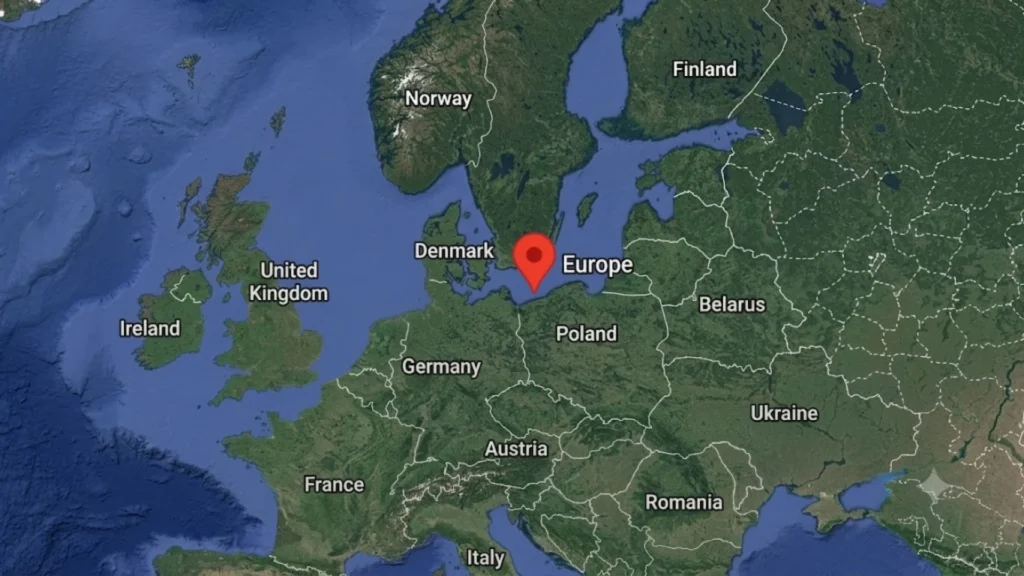
The Map of Europe: Your Passport to Planning the Perfect Trip
Let’s be real. Looking at a map of Europe can feel like staring at a beautiful, confusing puzzle. There are so many countries crammed together. So many squiggly borders. So many names that look alike.
But here’s the secret. That map of Europe isn’t just lines and colors. It’s a treasure map. It’s the key to unlocking the best vacation of your life. Whether you’re a student trying to ace a geography test or a traveler dreaming of sipping espresso in Rome, you need to understand this map.
I remember my first trip to Europe. I had a printable map of Europe that I found online. I thought I was so smart. I planned to visit Paris, then Berlin, then Rome, all in one week. I didn’t look carefully at the Europe map with country names. I just saw dots and thought, “How far can it be?” Well, let me tell you. I spent 18 hours on a train in two days. My back hurts. My wallet cried. I learned my lesson the hard way.
A political map of Europe shows you the borders. A physical map of Europe shows you the mountains. But the real magic? It’s when you use a detailed map of Europe to plan your route. It’s about seeing the whole picture. It’s about understanding the boundaries of the European continent. Trust me, your future self will thank you.
Table of Contents
Why You Can’t Plan a Trip Without a Europe Map
You wouldn’t build a house without a blueprint. So why would you travel without a map of Europe? It’s the foundation of any good adventure. It’s the difference between a chaotic scramble and a smooth journey.
First, let’s talk about distance. Looking at a European map with country names, it’s easy to think everything is close. Portugal and Poland look like they are touching. But the geographic map of Europe reveals the truth. They are over 1,500 miles apart! You can’t just “pop over” for lunch.
Also, borders matter. A political map of Europe shows you the lines. But those lines mean different things. Some countries are in the European Union. Some are in the Schengen Area. This affects your visa and how you move. A good interactive map of Europe can help you see these zones.
Bullet points on why maps are crucial:
- Distance: It helps you see the real space between cities.
- Borders: It shows you which countries you can enter easily.
- Routes: It helps you plan the best roads or train lines.
- Regions: It shows you the different European regions like the Alps or the Mediterranean coast.
Looking at a modern map of Europe also shows you new trends. In 2026, travelers are shifting focus. They are moving away from crowded tourist traps. A recent article highlighted that tourists are now looking for “hidden gems”. A Europe travel map helps you find these spots. You can look at the map and see a small town away from the big city. That’s where the magic is.
Political vs. Physical: Reading the Different Types of Maps
Okay, let’s get into the nitty-gritty. There are two main types of maps. You have the political map of Europe and the physical map of Europe. They look different because they show different things.
Political Map of Europe: The Man-Made Borders
The political map of Europe is all about people. It shows the countries in Europe on a map. It draws the European political boundaries. It also marks the capital cities of Europe. This is the map you use to see where one country ends, and another begins. It’s essential for understanding politics and travel rules.
Think of it like a coloring book. Each country is a different color. You can easily spot the European Union countries on the map. You can see which nations are part of the Schengen Area on the map for easy travel. When you look at this map, you see the administrative map of Europe.
This map is super useful for planning your itinerary. If you are traveling by train, you need to know the borders. Some train routes stop at borders. You might need to show your passport. The political map of Europe helps you prepare for these stops. It also shows you the European capitals map. This is great for planning city breaks.
Physical Map of Europe: The Lay of the Land
Now, flip the script. The physical map of Europe is about nature. It shows the European landforms. You see the mountain ranges in Europe like the Alps and the Pyrenees. You see the major rivers in Europe like the Danube and the Rhine. It shows the plains, the seas, and the European climate zones.
This map is a game-changer for travel planning. Why? Because mountains affect travel. If you want to go from Spain to France, the Pyrenees mountains are in the way. You have to go around them or through a tunnel. That takes time! The physical map of Europe tells you this story.
It also shows you the European topography. You can see where the land is flat (good for driving) and where it’s hilly (good for hiking). If you are a nature lover, you need the physical map. It helps you find the European regions that are perfect for your interests. You can find the best ski resorts in the Alps or the best beaches on the Mediterranean.
Quick Comparison:
- Political Map: Shows borders, countries, and capitals.
- Physical Map: Shows mountains, rivers, and land elevation.
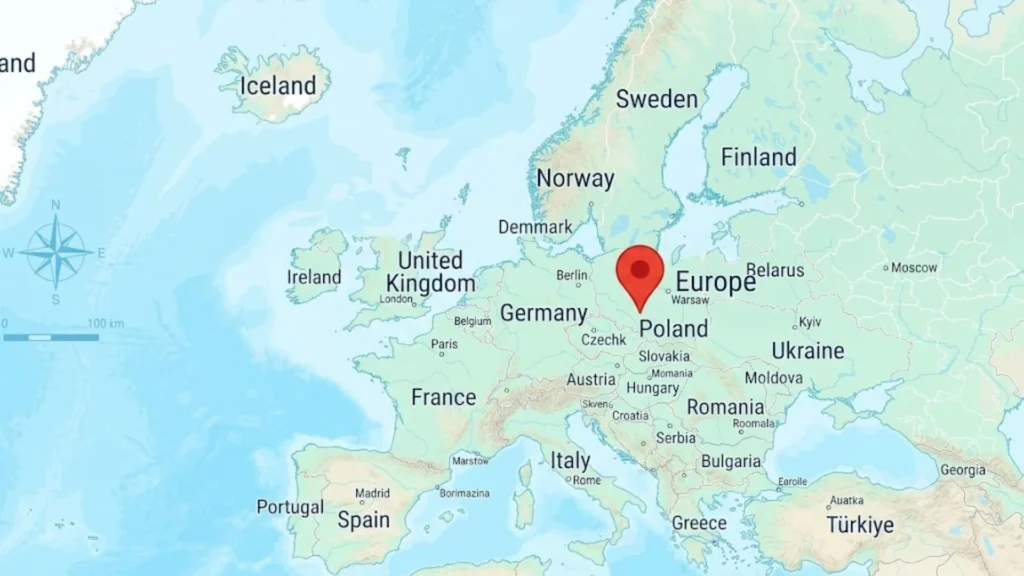
Navigating the Regions: Eastern, Western, Northern, and Southern Europe
Europe isn’t just one big blob. It’s divided into regions. Each region has its own vibe. Understanding the Eastern Europe map vs. the Western Europe map is key to planning your trip.
Western Europe is often the classic tourist trail. Think France, Germany, and the UK. The Western Europe map shows a dense network of cities. It’s highly developed. The trains are fast. It’s easy to get around. But it can be expensive.
Eastern Europe is a different story. The Eastern Europe map shows larger countries like Poland and Ukraine. It has a rich history. It’s often cheaper than the West. You can find amazing castles and medieval towns. It’s a great place for budget travelers.
Then you have the Northern Europe map. This includes Scandinavia. Think Norway, Sweden, and Finland. This map shows a lot of water and fjords. It’s beautiful but cold. It’s perfect for seeing the Northern Lights.
Finally, the Southern Europe map is all about the sun. Think Italy, Spain, and Greece. This map shows a lot of coastline on the Mediterranean Sea. It’s the place for beaches, pasta, and warm weather.
The Central Europe map sits right in the middle. Countries like Austria and Switzerland are here. This is the heart of the continent. It’s a mix of all the other regions.
Why does this matter? When I planned my trip, I only looked at the Western Europe map. I missed out on the cheaper, cooler spots in the East. Now, I always study the European map by region. It helps me balance my budget and my experiences.
Digital Tools: Interactive Maps and Navigation Apps
Forget the giant paper maps that take up your whole car. The future is digital. The interactive map of Europe has changed how we travel. It’s like having a tour guide in your pocket.
Apps like Google Maps are the standard. But there are also specialized apps. The Michelin Maps Europe app is great for road trips. It shows you scenic routes. For train lovers, there are amazing tools. You can use an Europe railway map to plan your Interrail trip. Some apps even show you how far you can travel by train in a set time.
I remember using a European road map app on my phone. We were driving through the Alps. The road was winding and scary. But the app showed us the elevation. It warned us about the steep drops. It made us feel safer. The interactive map of Europe didn’t just show us where to go. It showed us what to expect.
There are also map-based planners. These help you create your own travel routes. You can drop pins on all the places you want to visit. The app then connects the dots. It shows you the best order to visit them. This saves you time and money.
Digital Map Tools to Try:
- Google Maps: The classic for driving and walking.
- Michelin Maps: Great for road trips and scenic routes.
- Railway Apps: Perfect for planning train journeys.
- Route Planners: Helps you build a custom itinerary.
Must-Have Maps: Printable, Blank, and High-Resolution
Sometimes, you need to go old school. Paper maps are still awesome. They don’t need a battery. They don’t have a signal. They are just… there. And for students or planners, specific types of paper maps are a lifesaver.
The printable map of Europe is a classic. You can print it at home. You can mark it up with a pen. You can circle the places you want to go. It’s great for brainstorming. It’s also great for kids.
Then there is the blank map of Europe. This is the ultimate test. It has the borders but no names. You have to fill in the countries in Europe map yourself. It’s a fantastic learning tool. Many schools use a blank European map for students that is blank. It helps you memorize the countries and capital cities of Europe.
If you want the best quality, look for a high-resolution map of Europe. This is for serious planners. You can zoom in and see tiny villages. You can see the small roads. You can even see the European population map details. It’s a deep dive into the Europe atlas.
Why use paper maps?
- No Battery: They never die on you.
- Big Picture: You can see the whole European continent map at once.
- Learning: Blank maps are the best way to learn geography.
- Planning: You can draw routes and mark spots.
I always keep a printable map of Europe in my bag. Even when I use my phone, the paper map is my backup. It’s saved me more than once when my phone died in a remote village.
Travel Hacks: Using Maps to Find Hidden Gems
Here is the secret sauce. Using a map of Europe is not just about getting from A to B. It’s about finding the C, D, and E that you never knew existed. It’s about discovering the “hidden gems”.
How do you find these gems? Look at the Europe map with country names and then look away from the big cities. Zoom in on the spaces between them. Look for national parks. Look for small towns with funny names. Look for coastlines that aren’t labeled with a big city.
For example, in 2026, a city called Oulu in Finland is getting a lot of attention. It’s the European Capital of Culture. On a map, it’s way up north. Most people would skip it. But the map shows it’s on the coast. It’s near the Arctic Circle. That tells you it’s a place for nature and unique culture.
Also, look at the physical map of Europe. Look for the rivers. Historically, people settled along rivers. You will often find charming towns along the major rivers in Europe. The Danube River, for example, flows through four capital cities. Following the river on the map is a great way to plan a trip.
Finally, use the European transportation map. Look at the train lines that go to smaller towns. If a train goes there, it means there is something to see. I once took a train to a tiny town in Switzerland just because it was the end of the line. It turned out to be the most beautiful place I’d ever seen.
Conclusion: Your Adventure Starts with a Map
So, there you have it. The map of Europe is your best friend. It’s not just a piece of paper. It’s not just an app. It’s a storybook. It’s a planning tool. It’s your ticket to adventure.
Don’t be like me. Don’t just look at the dots and guess. Take the time to understand the Europe map with borders. Study the countries in the Europe map. Check out the physical map of Europe to see the mountains and rivers. Use a political map of Europe to understand the rules.
Whether you want a Europe travel map for your phone or a printable map of Europe for your wall, get one. Study it. Dream about it. Let it guide you. The continent is waiting. The map of Europe is the key. Now go unlock your adventure. Grab your high-resolution map of Europe and start planning.
1. What is the best map of Europe for travel planning?
The best map depends on your needs. For general planning, a political map of Europe showing countries and capital cities is great. For driving, a European road map or a digital app like Michelin Maps is ideal. If you are using trains, look for a specialized European railway map.
2. Where can I find a free printable map of Europe?
You can find many free printable maps of Europe online. Websites like Homemade-Gifts-Made-Easy offer blank and labeled versions. The Nations Online Project also provides a detailed general map of Europe that you can use for free with proper credit.
3. Is it better to use a paper map or a digital map in Europe?
It’s best to use both. Digital maps like interactive maps of Europe are great for real-time navigation and finding routes. However, a paper map (like a printable map of Europe) is a reliable backup in case you lose signal or your battery dies.
4. How has the Europe travel map changed in 2026?
In 2026, the European travel map is shifting focus. Travelers are moving away from just big cities. They are looking for “hidden gems” and places with cultural depth. Destinations like Oulu, Finland (European Capital of Culture 2026) are becoming popular spots on the map.
Read More: Amex Travel